
Council Corner: Updates from the Regular Church Council Meeting – September 28, 2026 Informational Items: Update from Financial Ministry
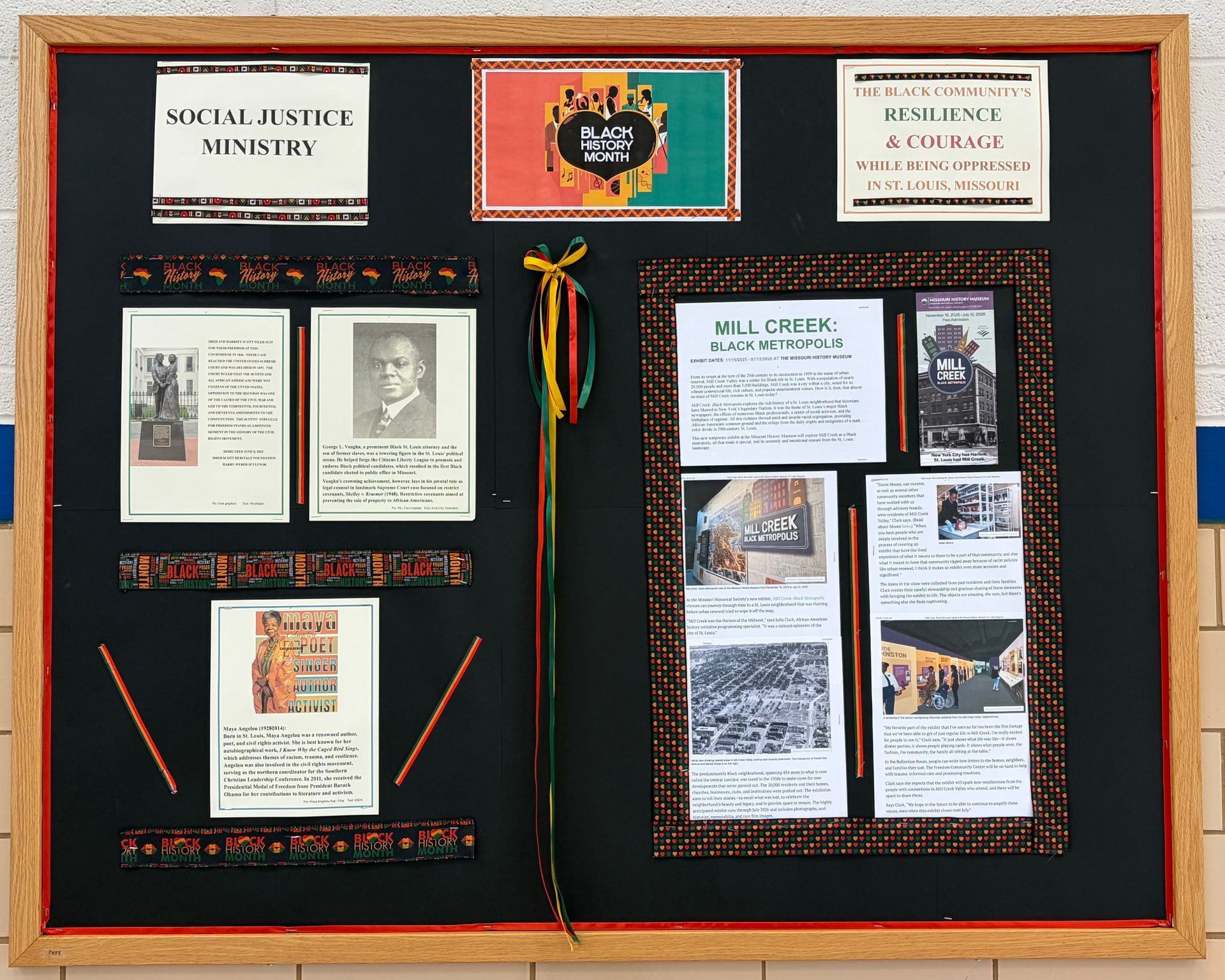
Social Justice Ministry - August Spotlight

Thursday, September 10 | 5:30 to 8:00 pm | 11735 Denny Rd., St. Louis, MO 63126

Sunday, September 13 | 11:00 AM | 11735 Denny Rd., St. Louis, MO 63126
Council Corner: Updates from the Regular Church Council Meeting – August 24, 2026 Informational Items: Update from Financial Ministry Meals on Wheels opted not to renew their annual grant funding for our Backpack program. We are currently seeking alternative funding – we appreciate the continued support of the Sugarbaker Foundation, which helps supplement this mission. The 2026-2027 Backpack Program is still being planned, but it could look different than previous years. Update from Physical Facilities Ministry The new breaker boxes passed the county inspection and we’re still in the process of labeling each breaker. Social Hall air conditioning is still leaking – will continue refilling the freon until the new coil can be install (see Actions Taken). Miscellaneous Updates Following discussion regarding the next step in the Bequest process, Council will develop a perspective to bring to the congregation by the Annual Meeting. It was not voted on but it was the consensus - that we would be prioritizing and developing a vision. Personnel Ministry is continuing their work on updating staff job descriptions and preparing for goal-setting, while finalizing budget recommendations for the Finance Ministry. The Cemetery is surveying the remaining open ground on the eastern area of the Park Hills section, allowing for more two grave and single plots. Looking Ahead – Items Upcoming in Next 1-2 Months Approval of 2027 Budget Approval of delegates for the Conference Meeting in November ( we have two of the three needed for the Conference meeting; still need four delegates for the Association meeting – please reach out if you’re interested in serving ). Performance Reviews and Goal Setting Employee Manual Updates (2019 version) Approval of revised Disaster Preparedness Proposal Upcoming Events – In an effort to better prepare for the various events and events within events, Council members use a more detailed calendar . We hope this tool also helps you better plan for Church activities. Celebration Sunday is September 13 th – this special St. Lucas tradition is open to everyone and follows the conclusion of service; it also falls on Grandparents Days, another reason to celebrate together. Community Meal is October 4 th – this one-time event commemorates Good Neighbor Week and is sponsored by a grant from ServMO and America250. More info to come. Actions Taken: Approved a bid from IFS for $16,986 to repair and replay the fellowship hall chiller coil and install hail guards. While we wait for parts, installation may not happen for 6 weeks. Approved appointments to the nominating committee (Kirk Dalgaard, Jack Laudenslager, and Linda Taylor). One council term is ending in 2026.
Social Justice Ministry - August Spotlight
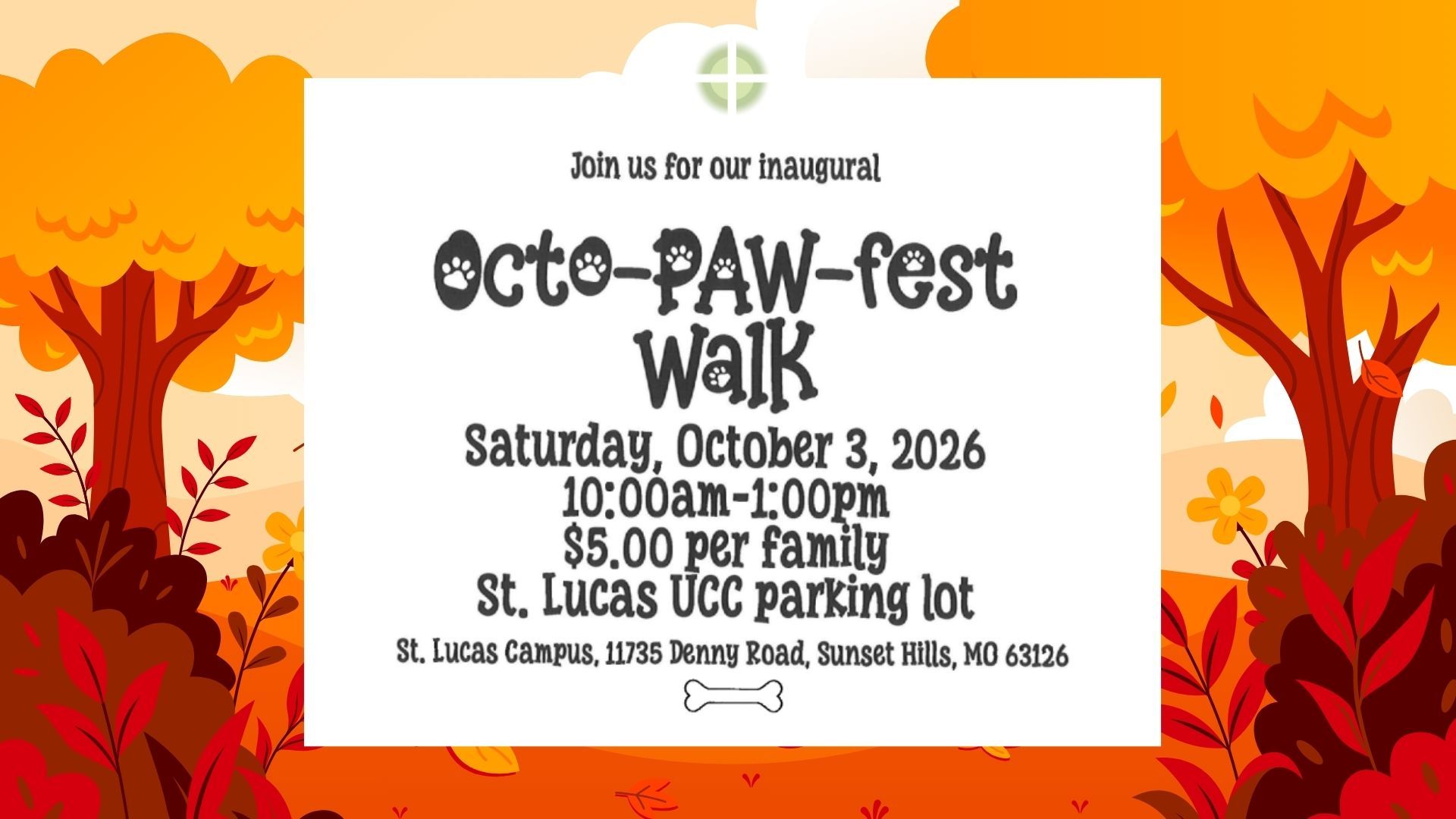
Saturday, October 3 | 10:00 AM - 1:00 PM | 11735 Denny Rd., St. Louis, MO 63126
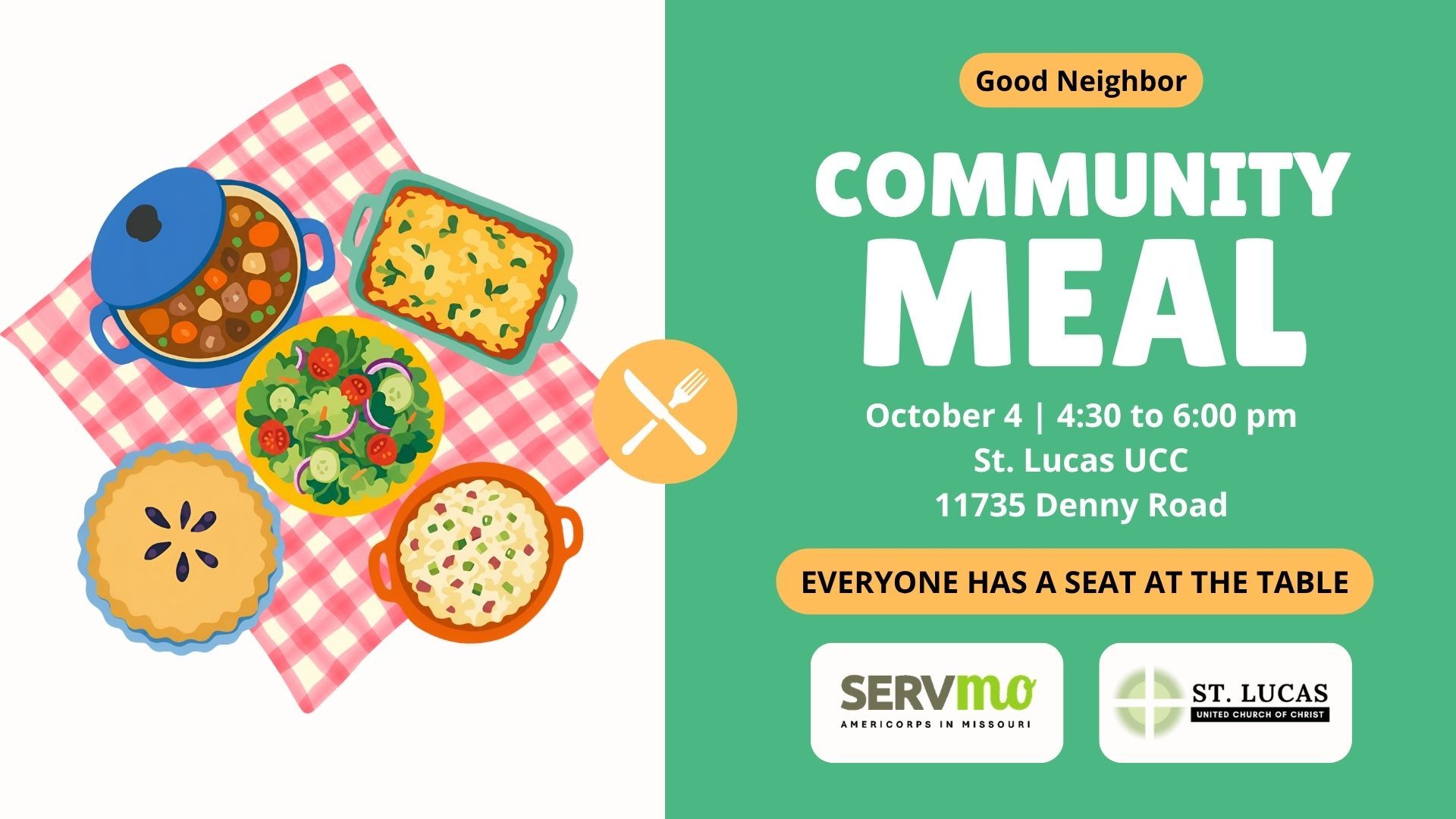
Sunday, October 4 | 4:30 PM | 11735 Denny Rd., St. Louis, MO 63126
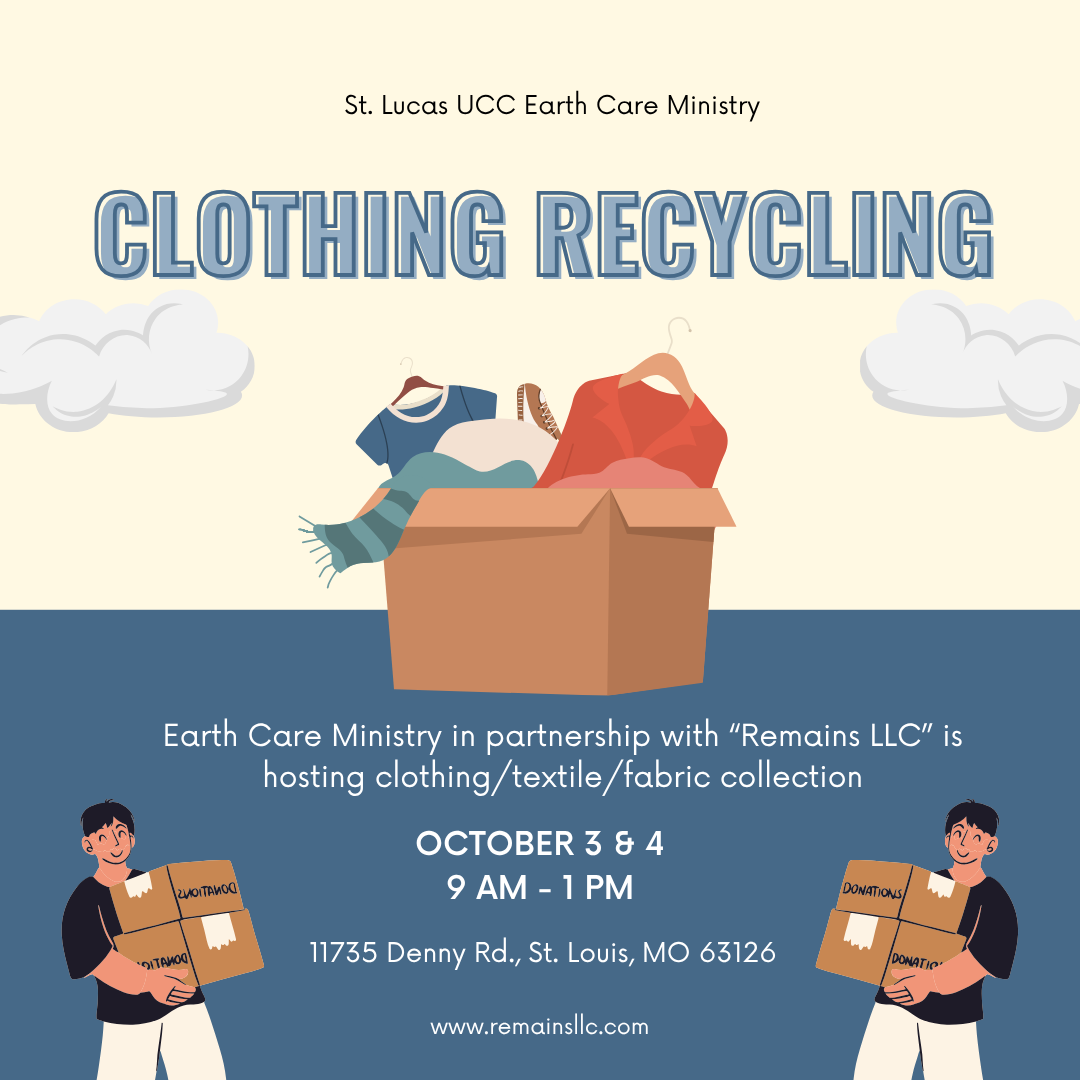
October 3 & 4 | 9:00 AM - 1:00 PM | 11735 Denny Rd., St. Louis, MO 63126
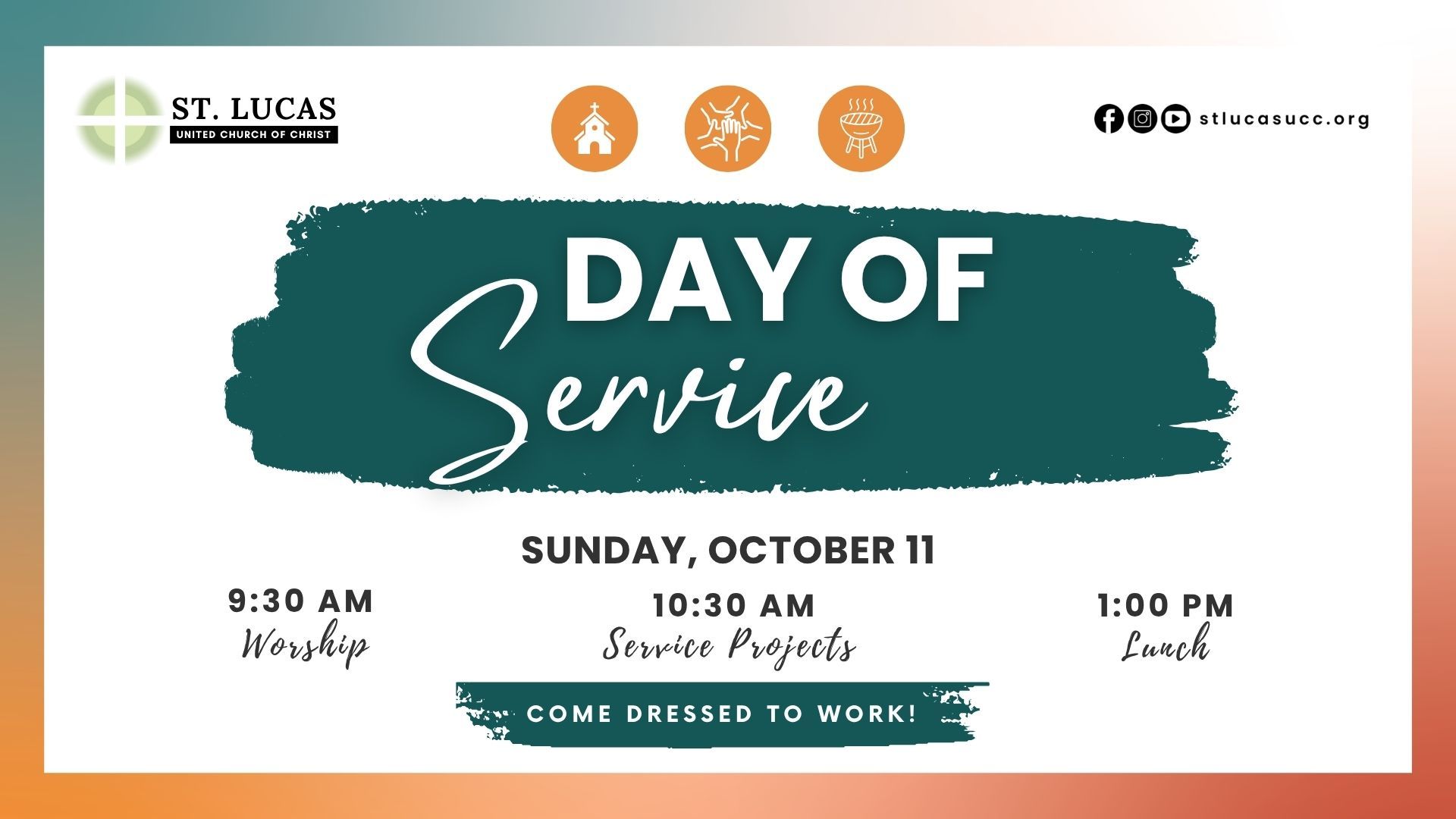
Sunday, October 11 | 9:30 AM - 1:00 PM | 11735 Denny Rd., St. Louis, MO 63126